Sunday, 31 July 2016


"Already he'd become an expert in female sadness"

Where to go after last week's claustrophobic and chilling Icelandic crime drama 'Snowblind'? The heat of free spirited California couldn't be further removed! Emma Cline's debut novel is set mostly in California in the late 1960's and concerns a young girl, Evie, whose obsession with a group of girls leads her to a ranch where a collective family, of sorts, live together in a commune. Sounds familiar? The Girls is certainly inspired to some degree by the notorious case of the 'Manson family murders' and their cult leader Charles Manson.

But to say that the novel is a straight fictional account of the Manson case is to do Emma Cline a disservice for The Girls is a coming-of-age tragedy with more than a nod to Jeffrey Eugenides The Virgin Suicides.

The bright and over exposed image on the cover of the UK hard-back edition makes The Girls an inevitable summer read for anyone trawling the better book stores on the high street. This cover perfectly evokes the sun drenched California setting about which Cline so articulately writes. The prose on each page is crisp and arid with the faintest fragrance of a burnt joss stick.  

The narrative is told in flashback from the point of view of an older Evie who looks back to the summer of '69 and a time when she was closer than most will ever be to the kind of sensational headlines that define a generation. Evie is and was an outsider who exists on the fringes of other peoples joy and loss. Although she opens up at times Evie will always be a closed book drawn to the enigma of other people.

I was pretty hooked for two thirds of this novel, these are the parts that deal with Evie's discovery of the girls, her induction to the ranch and early relationship with Russell (the supposed Manson character).  Cline expertly builds believable characters without a hint of cliche but the trouble with the novel is that the final chapters fly by without the perfect pacing on the earlier parts. There is a unnecessary rush to resolve the story which might be to avoid too much comparison with the Manson murders. Or perhaps Evie's distance from events at the ranch is ultimately a dead end in narrative terms?

In any case The Girls is a great debut from a new writer who having already had work published in the Paris Review and Granta will be around to stay.

I read this novel on Kindle in July 2016 in the sun at home in Oxfordshire

The Girls by Emma Cline, published by Vintage, 368 pages


Sunday, 24 July 2016


"The red stain was like a scream in the silence"

Coming off the back of my unexpected first foray into the work of Anne Tyler I needed something darker, something more enigmatic to complete my summer holiday reading list; so it was time to delve back into the Icelandic crime genre. Having previously read and and reviewed Ragar Jonasson's novel Night Blindthe second in the Dark Iceland series, this time I'm right at the beginning with Snow Blind.

Snow Blind is the first time we meet Jonasson's protagonist Ari Thor, the new guy in town having been sent from Reykjavik to work with the police department in remote town Sigluffjordur. Thor is an outsider which translator Quentin Bates makes work well in translation for us readers discovering Icelandic idiosyncrasies for the first time.

In this novel Ari Thor finds himself investigating the case of a barely conscious young woman left bleeding in the snow and a death amongst the members of the local amateur dramatic society. This is classic Midsomer territory, a middle-class microcosm of unassuming characters, but scratch beneath the surface and you'll find the kind of secrets and untruths that the Nordic Noir genre dishes out in spades. With the town cut off from the outside world after an avalanche the story takes on a chilling twist that you simply couldn't find in other less accomplished crime fiction.

Jonasson's skill is taking the conventions of the crime writing genre and layering on top a uniquely Icelandic quality. In this case its the idea of claustrophobia that Jonasson plays on so well. Firstly in the setting, not only is Iceland a small and relatively isolated island but Siglufjordur is on the remote northern coast. Even within the town the story is set within a small and intense group of people. Secondly its the weather which adds a suffocating and smothering feeling as the snow comes down to blanket everything. Ari Thor could easily be stifled by the asphyxiating nature of the town but through a mixture of faith and leading man (Thor like) heroics he prevails. The third in the Dark Iceland series is out soon and I, for one, can't wait. 

There is something beautifully perverse in reading a novel set in the Icelandic Winter whilst basking in 30 degree Mediterranean sunshine but isn't that what fiction is all about? 

I read this novel in paperback in July 2016 by the pool in Dubrovnik, Croatia

Snow Blind by Ragnar Jonasson (translated by Quentin Bates), published by Orenda Books, 300 pages


Sunday, 17 July 2016


"It makes you wonder why we bother accumulating, accumulating, when we know from earliest childhood how its all going to end"


I'd planned my summer holiday reading list with extreme care and precision seeking out the titles that I'd hope would suit seven lazy days on the sun. What I hadn't planned for was my kindle crashing out on day 3 - aaaarrrgh!!! Note: Don't leave e-books in direct sunlight, they don't like it :(

I'd packed two paperbacks, and a quick read from The School of Life, but that wasn't going to last a week so I was forced to take emergency measures. Luckily there was a stack of pre-read paper backs in a shady corner of the pool bar just waiting to be picked up. My choice consisted of:

A copy of yesterday's New York Times
Das Perfect Opfer by Gillian Flynn
Eine Kurze Geshichter von fast allem by Bill Bryson
Verschworung by David Lagerkranz
A Spool of Blue Thread by Anne Tyler 

Needless to say, five minutes later I was back on my sun-bed with my first Anne Tyler. Straight of the back of Hotel du Lac I had been looking forward to something more virile, brawny even, yet here I was about to delve in to a multi-generational American family saga.

A Spool of Blue Thread is epic in its portrayal of a single family, the Whitshanks, across a number of generations. Tyler eases us in gently, the start of the novel is set in contemporary Baltimore and begins tightly with parents Red and Abby and their four grown up kids. The story plods along with occasional tangents that dial in and out on specific characters back stories largely based around the family home itself. 

At times the rabbit holes are gripping, such as the parts about youngest son Stem, but most times you're left wanting a whole lot more. Eldest son Denny is the most interesting character yet we never get chance to read his real backstory.

Some of the prose is touching; "But still, you know how it is when you're missing a loved one. You try to turn every stranger into the person you were hoping for" but other times its all a bit too civil for my taste. Even the rows and fights are well-bred and courteous. 

Anne Tyler is without doubt an accomplished story teller and reading more of her work I'm sure I'd come to understand her idiosyncrasies  For me, this is a rather polite and only partly engrossing summer read but If I was reading this at home in inevitably shorter bursts I'm not sure I'd be able to keep going. The early chapters are strongest but once the story delves back too far in time the narrative unravels. The problem here is knowing when to stop. These characters are clearly very personal to Anne Tyler and I suspect she could continue to write the Whitshank saga for ever. Despite my misgivings I am glad I've read Anne Tyler in a reading list curve ball kinda way. 

I read this novel in paperback in July 2016 by the pool in Dubrovnik, Croatia

A Spool of Blue Thread by Anne Tyler, published by Vintage, 482 pages


Sunday, 10 July 2016


"That sun, that light had faded, and she had faded with them. Now she was as grey as the season itself "


Having just finished Yoko Ogawa's weird and macabre Hotel Iris for my next read I'm checking into another out of season hotel, this time the Hotel du Lac. This 1984 Booker Prize winning novel has been reissued this summer by Penguin with a beautiful cover image which screams summer read. At only 193 pages could this book be the perfect sun-bed companion? I had to find out.

The novella concerns an unlikely named romantic fiction writer, Edith Hope, who is sent to the Hotel du Lac on the shores of Lake Geneva to "disappear for a decent length of time and come back older, wiser and properly sorry". Quite what sort of scandal has seen Edith sent away from London you'll have to be patient to find out. To be honest, I didn't connect with Edith as such; her general moping and social insecurities are just annoying but for her expert perception of the other hotel guests she can be forgiven - she is a writer after all. 

The setting of the out of season hotel is a clever technique used by Brookner to great effect. What sort of person has the time or inclination to check into a faded old lady of a residence long after the sun has set? There are a hundred stories here about the overheard dining room conversations and eccentric guests propping up the bar but Brookner instead focuses on Edith's relations with a small number of guests. This scratching the surface could have resulted in shallow stereotypes but instead we discover a wonderful cast of supporting characters, such as Mme de Bonneuil and Mrs Pusey, who leave Edith questioning her own identity.

Very little actually happens at the Hotel du Lac and the book is all the more compelling for it. From my view on a hotel sun-bed with full sight of my fellow guests I practiced by own skills of perception - yes this is a past-time not just reserved for middle class ladies! Ultimately this is a very British book about style through the eyes of someone banished from town for her own breach of etiquette. But don't think this is prosaic or out of date, Anita Brookner's literary style is absolutely relevant today.

I finished this book in almost one sitting, the odd dip in the pool the only interruption, and I'd recommend reading this book in a similar way.

I read this novel in paperback in July 2016 by the pool in Dubrovnik, Croatia

Hotel du Lac by Anita Brookner, published by Penguin, 193 pages


Monday, 27 June 2016


"Eternal truths are ultimately invisible, and you won't find them in material things or natural phenomena, or even in human emotions"


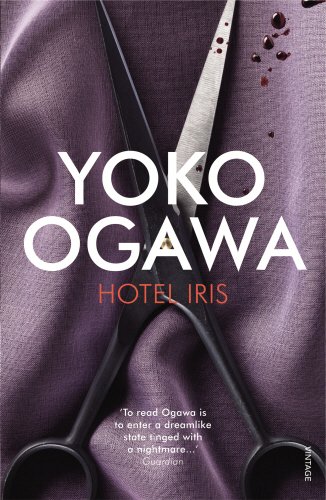
Off the back of Han Kang's brilliant and unique The Vegetarianwanted to dip back into the work of South East Asian women writers and came across this novella from Yoko Ogawa. At only 173 pages this is a wonderfully concise slice of Japanese fiction translated into English by Stephen Snyder who has previously translated works for both Ogawa, Natsuo Kirino and Ryu Murakami.

Checking in to Hotel Iris is disturbing in itself. The mouldy and damp hotel crumbles in a forgotten sea-side resort somewhere in Japan managed by a cruel matriarch with her young daughter Mari forced to work on the reception. Out of season the hotel attracts unlikely guests such as a blind pensioner who is switched from a room with a sea view to one without on arrival. 

Mari is essentially trapped in a world entirely controlled by her mother until one day there is a ruckus in the hotel when a prostitute bursts from one of the bedrooms accusing a elderly guest of being violent towards her. Despite her mothers clear disgust Mari is drawn to the elderly man and begins to chat with him days later in the market.

The translator, as he is referred to, lives in an isolated house on a nearby island where he translates books into Russian. The attraction here to Mari is clear, over the water lies another world filled with everything that is missing from the Hotel Iris. 

As Mari gets to know the translator their relationship grows and once Mari enters his world she is subjected to a brutal attack. The incident leaves Mari questioning everything but she continues to see the Translator with a bizarre coming of age fascination. Like The Vegetarian, these passages are hard to read but strangely addictive.

There is no doubt that this book will speak to each reader in a unique way. For me Ogawa's story is about how tough and complicated the world outside can be. The chapter including the dinner party with the Translator's nephew I think beautifully captures the experience of reading the novel; unnerving and unforgettable.

I read this novel in paperback in June 2016 in part on the Southbank of the Thames.

Hotel Iris by Yoko Ogawa, published by Vintage, 173 pages


"Nine minutes to five. Ozone and sea sparkle and carnival licence. This is how it begins"


The Pier Falls is a new short story collection from Mark Haddon. Having already mastered the long form novel with The Curious Incident of the Dog in the Night-time, amongst others, this is the first test of Haddon's skills with the tricky short story format.

The book itself contains a number of shorts with no discernible thematic or narrative link as such but each story demonstrates the limitless imagination of a writer who transports us from the everyday to the mythical and the extraordinary with equal skill. For the purpose of this review I'll focus on the first story The Pier Falls.

The Pier Falls presents a classic diorama of the traditional British seaside holiday; fish and chips, striped deck chairs and screeching sea gulls; you can almost taste the pink candy floss. This instantly recognisable backdrop is steeped in nostalgia and longing for a simpler time. Reading the story on the Harbour Arm in Margate I looked back at the town and saw the bleached out orange and sun-burnt red colours exactly as they are shown on the vintage deck chair cover of the novel. 

As the story develops its like a seaside View-Master reel; each click reveals more in vivid day-glo 3D. The perfect summer day at the seaside turns into tragedy as the very foundations of the crowded pier begin to crumble. Bolts fly as metal supports tumble into the sea and shards of wood separate screaming families. Haddon doesn't hold back in descriptions of adults and children falling from the pier into the water. The death count builds quickly yet the narrative continues at pace with little respite. Haddon knows exactly how to create heart stopping tension in only a few sentences, you'll be literally holding your breath.

For me The Pier Falls is an allegory not so much for the end of the British holiday but for the end of nostalgia for the past. Its a great read and a monumental introduction to the other stories in the collection. Read them once then start over again for maximum enjoyment.

I bought this particular book in hardback largely due to the individual illustrations that accompany each story. Good on Mark Haddon for making these brilliant line drawings and for including them specifically in this book shop only edition. 

I read this novel in hardback in June 2016 in part in Margate.

The Pier Falls by Mark Haddon, published by Jonathan Cape, 336 pages


Sunday, 19 June 2016


"D-E-L-U-S-I-O-N-A-L. Eleven points plus fifty point bonus"


Epiphany Jones is the debut novel from American journalist and novelist Michael Grothaus. Whilst the book will no doubt be shelved under 'Crime thrillers' in bookshops Epiphany Jones in truth is a unique genre blurring novel that cleverly weaves together a criminal investigation, wildly dark humour and psychologically driven misadventure.  The novel holds no punches; sex trafficking, the seedy Hollywood underworld, art theft, psychotic hallucinations and kidnapping this book has it all, but is there any sense behind Epiphany Jones?

Our protagonist is Jerry, a guy struggling to come to terms with a traumatic past, who is suspected of stealing a priceless Van Gogh painting from the museum in which he works as a picture restorer. Forced underground he meets a mysterious woman, Epiphany Jones, who is utterly beguiling to the loner and online porn addicted Jerry.  

The couple end up on the run to Mexico and then across the Atlantic to Portugal before landing at the Cannes film festival. The plot is fast paced and packed full of episodes that develop the unlikely relationship between Jerry and Epiphany who believes the voices she hears in her head are from God himself. With Jerry fighting his own deep bouts of depression and hallucinations you'd be forgiven for wondering where the comedy lies yet in amongst this challenging set of circumstances Grothaus finds deeply dark and welcome humour. 

Michael Grothaus's talent is creating a world populated by initially unlikable characters that end up being completely readable. At times I thought of Douglas Coupland in books like Worst. Person. Ever. Likewise the backdrop to the story which exposes the dark underbelly of Hollywood is reminiscent of Bret Easton Ellis's work in Glamorama and Imperial Bedrooms; explicit, raw and unnerving.

There's is no doubt that this novel is memorable and Grothaus absolutely delivers a new voice in a crowded genre but the trouble I have with Epiphany Jones is that, whilst the characters are well drawn and believable, I found it pretty difficult to connect emotionally. Despite this, there is a lot, and I mean a lot, going on in this story which keeps you guessing right to the end.

For me the real genius in this novel is the bringing together of unconventional characters in a narrative around mental health issues and serious crime.   

I read this novel in paperback in June 2016 in mostly at home in Thame, Oxfordshire.

Epiphany Jones by Michael Grothaus, published by Orenda Books, 340 pages


Saturday, 11 June 2016


"I have no roots, he thought. I'm not connected to anything"


after the quake is a collection of short stories by Haruki Murakami which all deal in some way with the aftermath of the devastating Great Hanshin earthquake which hit the Japanese port of Kobe on January 17 1995. Each story is set within a month of the earthquake at a time when the entire country was reflecting on the huge loss of life and livlihood including Murakami's own parents who lost their home in the disaster.

There are 2 standout short stories within this collection, Super-Frog Saves Tokyo and Honey Pie, which both demonstrate a different Murakami trope; firstly the whimsical and supernatural and secondly the theme of the lonely adult.  

In Super-Frog Saves Tokyo young bachelor Mr Katagiri returns home from work to find a giant and highly articulate frog waiting for him. Frog explains to the unassuming Mr Katagiri that his help is needed to battle a giant worm who is set to unleash a second earthquake, this time on Tokyo itself. In this story Murakami typically makes overt references to other literature, the opening scene is both Kafka and Manga-esque in itself, and other writers such as Hemingway and Tolstoy who are both mentioned by Frog to convince Mr Katagiri that it is his obligation to help in the battle with Worm. Mr Katagiri is the 'everyman' jolted out of his everyday routine and forced to face a life changing challenge. There is a sense here of Murakami himself exploring his own role in repairing the battered Japanese psyche.

In Honey Pie (another story named after a Beatles song following Norwegian Wood) Murakami writes about a college love triangle and a young girl haunted at night by The Earthquake Man. Murakami's skill as a writer of short stories is evident throughout Honey Pie which includes a story within a story, which protagonist Junpei reads to the young girl, aswell as a flashback to college life which sets up the relationship between Junpei and his friends. This theme of the lonely and isolated adult coming to terms with decisions made in the past is classic Muramaki but in Honey Pie the overarching theme is one of hope. Building on the idea of Murakami questioning his own role as cultural guide in Super-Frog Saves Tokyo, in Honey Pie we find an example of Murakami offering solutions and faith.

The fact that there is so much to say about only two of the stories in this collection demonstrates just how good a read this is. Admittedly some context is required to fully appreciate the stories but this is exactly where reading digital books is an advantage. There are times when you'll want to delve into Wikipedia to drill down into information about Murakami himself and about the Kobe earthquake. Some readers find this distraction an anathema to reading literature but for me its a open door to more layers of meaning. 

I read this collection of short stories on Kindle in June 2016 in part at the St David's Hotel at Cardiff Bay.

after the quake by Haruki Murakami, published by Vintage Books, 162 pages


Thursday, 2 June 2016


#amreading 'The Vegetarian' by Han Kang


"The sight of her lying there utterly without resistance, yet armoured by the power of her own renunciation, was so intense as to bring tears to his own eyes"

This year's Man Booker International Prize winner is a truly memorable novel by South Korean writer Han Kang whose work has been translated into English, for the first time, by Deborah Smith.

I'm a huge fan of Japanese literature from the likes of Murakami, Banana Yoshimoto and  Hiromi Kawakami, but had never read a Korean novel before largely as they are much less frequently translated into English than Japanese titles. I approached the novel with expectations based on reading novels like The Lake and Strange Weather in Tokyo and inevitably wondered what sort of influence Japanese literature would have had on Korean writers but I was also intrigued by Deborah Smith who was making her debut as a translator.

The Vegetarian is a novel in three chapters, in fact they were each published as separate novellas originally. The story concerns the heroine Yeong-Hye an average and unremarkable house-wife who one day decides to empty the freezer of meat; declaring herself to be vegetarian.

The opening chapter is a first person narrative from the perspective of Yeong-Hye's husband, Mr Cheong, who struggles to deal with his wife's new resolve. How will he cope when his wife accompanies him to dinner with his boss? Desperate for help he invites Yeong-Hye's family to dinner to where her father violently forces his daughter to eat a piece of pork - this is visceral and unfaltering writing that is innately uneasy to read.

The second chapter concerns Yeong Hye's brother-in-law who becomes obsessed with Yeong-Hye's body once he discovers that she is concealing a distinctive birthmark - a Mongolian Spot. The final chapter is set several years in the future when Yeong-Hye has lost contact with her entire family apart from her sister In-Hye who visits Yeong-Hye in a psychiatric hospital.

This is a novel about a family in crisis born out of one member no longer being willing to conform to social and societal norms. Han Kang expertly structures the novel around the three long chapters that explore the voices around Yeong-Hye. Though the narrative is never hers, Yeong-Hye remains the focus of the novel throughout.

Each chapter features dream sequences which blur the everyday and ethereal and provide the reader with rich and dynamic prose. The fact that these sequences work so well in The Vegetarian is a huge credit to the work of Deborah Smith who achieves a translation that is wonderfully readable in English whilst at the same time profoundly different to English language novels.

Off the back of reading this novel I'm sure I won't be alone in seeking out more Korean fiction and certainly more from the Han Kang/Deborah Smith partnership.     


I read this novel on paperback in May 2016 in West Malling, Kent

The Vegetarian by Han Kang and translated by Deborah Smith, published by Portobello Books, 160 pages

Monday, 30 May 2016


"Things like this weren't supposed to happen in Iceland, the most peaceful place on Earth"


Statistically there are more crime writers in Iceland than there are crimes and yet, in Night Blind Ragnar Jonasson creates a vividly real and believable landscape in which to set his uniquely Icelandic fiction. Night Blind is, in fact, the second book in the Dark Iceland series but the first that I've read and reviewed. 

The novel is set in Siglufjordur, a small fishing town in the North of Iceland, which is accessible only via a single road through a mountain tunnel. This setting, far from the more familiar location of Reykjavik is a clever device used to leverage the isolation and darkness of the dark Icelandic winter. If the setting also has an Agatha Christie quality this could be because Jonasson began his writing career by translating Christie's work into Icelandic!

As crime fiction goes this is recognisable, though utterly compelling, police procedural drama. Rookie policeman Ari Thor Arason leads the investigation which ensues when a policeman is shot dead outside a deserted house on the edge of town. What makes Night Blind stand apart is two fold. Firstly its the attention to characterisation; Siglufjordur is nigh on perfect as a stage that's home to a well conceived cast of characters that keep you guessing right to the end. Secondly its the superb pacing that drives the narrative throughout. Jonasson spares us the flab and offers up lean and slender prose that gets straight to the point. Night Blind is hugely readable and dangerously addictive.

This English version of Night Blind was translated by Quentin Bates who does an expert job at interpreting the Icelandic text (cover below) for an English speaking audience. I'm told that Icelandic literature is characterised by short staccato sentences which might appear as childish when translated but Bates manages to deal with this problem well. What edges are lost in translation is hard to say but the fact that Jonasson continues to work with Bates is a sign that he is in someway happy with the outcome.

So, Night Blind is a great piece of crime fiction that's succesfully been translated into English but that's not all. The novel also works at another level to keep the flames of the great 'Sagas of Icelanders' alive.

This is a novel steeped in Icelandic mythology from the isolated and remote settings that capture the wild and other worldly quality of this unique island to the hero detective Ari Thor Arason himself whose name references the hammer wielding Norse god. Jonasson knowingly writes for the domestic audience in Iceland at the same time as appealing to the global market by leveraging Iceland's idiosyncracies. 

If Icelandic culture can be said to be influenced by the tradition of the great Sagas then modern day crime authors like Jonasson can be seen to be continuing this great practice. Just as the great Sagas of the past galvanised the people of Iceland around a sense of national identity so too do Ragnar Jonasson, Yrsa Sigurdardottir and Arnaldur Indiridason contribute to a contemporary icelandic cultural identity. 

Anyway, I'm off to read Snow Blind (the first in the Dark Iceland series now)

I read this novel in paperback in May 2016 in part on the Harbour Arm in Margate.

Night Blind by Ragnar Jonasson, published by Orenda Books, 280 pages


This month's shortlist of the best reads for your bookshelf:


The Vegetarian by Han Kang
This year's Man Booker International Prize winner is a truly memorable novel by South Korean writer Han Kang whose work has been translated into English, for the first time, by Deborah Smith.


This is the debut novel from playwrite Barney Norris who saw success with his 2014 play Visitors. The novel is set in Norris's home town of Salisbury in Wiltshire and features the lives of five ordinary people brought together by one extraordinary event. 


What Belongs to You by Garth Greenwell
This is the debut novel from American author and poet Garth Greenwell. The novel tells the story, in three distinct parts, of a un-named American teacher living, working and falling in love in Bulgaria


The Wallcreeper by Nell Zink
"I was looking at the map when Stephen swerved, hit the rock, and occasioned the miscarriage. So begins The Wallcreeper, curious little novel about love, loss and birdwatching.


Some Rain Must Fall by Karl Ove Knausgaard

A literary memoir written by a great fiction writer for readers of fiction, an autobiographical epic through the lens of a writer desperate to write a literary classic.