Friday, 14 October 2016


"Fiction, she said when she'd stopped laughing, is impossible but enables us to reach what is relatively truth"


Public Library and Other Stories is a collection of short stories around the theme of reading and borrowing books. In-between each stories are brief essays and interviews in which Ali Smith digs deep into to crisis threatening so many public libraries to reveal the human and social impact.

For fans of fiction, like us, this is a wonderful read at a really crucial time. I'm still hurt by the closure of my childhood library which came off the back of brutal cuts by Lancashire County Council but there is more to come. 

Anyway, as soon as I finished Ali Smith's book I felt compelled to dust down my own personal manifesto for the future of the library, as previously published on this blog...

How do we measure the benefit of a good local library in the community?

We're now at a point when our libraries need a radical repositioning in the minds of the public. Events organised to celebrate National Libraries Day demonstrate that there ARE pockets of innovation and creativity at some independently minded libraries across the country but how can the success of one annual awareness day drive real change?

Libraries must leverage their role at the heart of the community to fill a huge gap being created by the decline of the traditional high street and cost saving in public services.

So, to that end here is the Word's Shortlist guide to the future for the neighbourhood library.....

1. Extended opening hours, at least on selected days, would open up library services to workers who struggle to leave their desks on tightly squeezed lunch breaks. Opening on Sundays would provide an alternative destination for families and couples during their leisure time. Demand will differ by location but libraries must be open when people want to use them.

2. Our local libraries should offer a programme of regular book clubs, gallery events, music recitals, film screenings and talks that bring like-minded people together. Events need not be managed by library staff but by collaboration with independant bookshops, special interest groups and a network of enthusiastic volunteers.

3. Pubs and cafes have long understood the benefit of providing groups and social clubs with a warm and friendly meeting place. Many libraries have unique and flexible spaces that could be put to similar benefit if they thought of themselves as 'destinations'.

4. Every town has a growing community of home workers and freelancers. Libraries should offer a place for them to meet, share and collaborate in a comfortable and connected environment. Who knows what future partnerships could be forged amongst the book-shelves. Free wifi is a start but communal hot desks would be even better.

5. Our local libraries should be our knowledge hubs offering advice through courses, briefings, oh and yes books. Working closely with local schools and colleges could lead to reciprocal benefits. Some supermarkets even offer after school classes for kids - this should be owned by the neighbourhood library. 

6. Bookstores have long understood the benefits of extending customer dwell time with cafes but libraries have been slower on the uptake. A new generation of librarian baristas wouldn't go amiss. Libraries could become the perfect testing ground for start up coffee brewers and artisan bakers.

7. With good quality newsagents on the decline in the high street Libraries have an opportunity to introduce a well stocked news stand covering specialist and professional print titles not stocked by WH Smith.

8. New start ups, Doddle and the like, are finding a growing market for parcel collection services at train stations. Libraries should work with a commercial partner in this area to help distribute all those Amazon orders (and maybe convert a few to book borrowing at the same time)

9: Many libraries offer much loved read and play sessions for pre-schoolers. This needs to continue but libraries also need to engage young adults. With YA publishing on a high libraries need to work harder at the stage when they currently lose their cool.

10: Finally, libraries need to embrace social media to communicate services and events and to attract new members. Book publishers create huge demand for new titles by developing digital content and working with online bloggers. Libraries are behind the curve.

So how do we measure the benefit of a good local library in the community; number of books borrowed, footfall through the door, demand for top titles, membership numbers? If each town had a happiness rating there can be no doubt that a well stocked and curated library, with friendly, knowledgable and approachable staff, that's open when people want to visit would take any town to the top of the league table.

I read this novel on Kindle, mostly on the train in and out of Marylebone

Public Library and Other Stories by Ali Smith, published by Penguin, 240 pages

Sunday, 9 October 2016

The Autumn edit.....

The best books I've read and reviewed this Autumn (so far).....


"Life has become so dense, these last years. There is so much happening. Thing after thing. So little space. In the thick of life now. Too near to see it"


"There are not many options for the evening that follows an afternoon of drinking. Only two in fact; remorse, or more drinking then remorse"


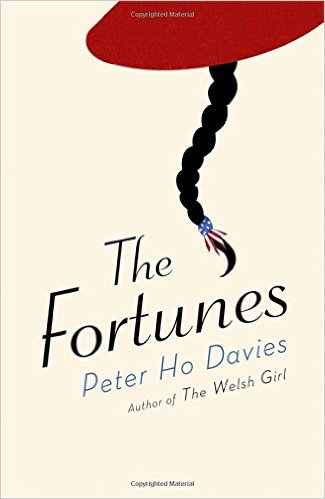
"I'm not that Chinese, he says, and its true. He's never felt more American. He's finally reached the limit of his Chineseness, the outermost frontier..."


Sunday, 2 October 2016


"Life has become so dense, these last years. There is so much happening. Thing after thing. So little space. In the thick of life now. Too near to see it"


Regular readers of this blog (he says with casual optimism) will know that I've been extra enthused of late about the books landing on my bed side table. First there was Ian McEwan's fantastically unique Nutshell followed by Peter Ho Davies epic The Fortunes. This week I'm literally jumping up and down about All That Man Is by David Szalay.

I came across this novel when browsing the Man Booker Longlist but only got around to actually reading it once it had made the shortlist. I've been reading a far bit of fiction from women writers recently, Deborah Levy and Hang Kang come to mind, so the idea of a novel from a male writer about what is it be a man called out to me.

The novel is essentially a series of short stories about men at different stages of life. The narrative is chronological and covers an entire lifetime from men in their early twenties to other men in their eighties yet the whole story takes place within a matter of weeks. The stories themselves are slightly connected, through location and theme, yet stand alone in many ways.

David Szalay uses his personal experiences living in France and Hungary etc to provide a truly authentic voice voice throughout. The earlier parts are strongest (this possibly says more about the reader  - in this case coming up to 40) as the later parts lack some of the emotional detail that really resonated with me. My favourite chapter concerns inter-railing in Europe which captured a blend of youthful optimism but boredom that I remember well.

All That Man Is is a novel about men, written for men. I've read and reviewed similar books recently, Some Rain Must Fall and Your Father Sends His Love come to mind, but for me All That Man Is has the edge - this is a must read and I've got high hopes come the Man Booker Award ceremony itself.  

I read this novel on Kindle, in part, in Canterbury, Kent.

All That Man Is by David Szalay, published by Vintage, 450 pages

Sunday, 25 September 2016


"I'm not that Chinese, he says, and its true. He's never felt more American. He's finally reached the limit of his Chineseness, the outermost frontier..."


Readers of my last blog post will know I'm on a roll. I read Ian McEwan's Nutshell in a matter of hours - if you haven't read it yet you need to. Anyway back to this post, I discovered this week's read, The Fortunes, in an article by David Mitchell in which he commented on the genius of Peter Ho Davies latest novel. Needless to say, I picked up a copy of the book the very next day; I'm a sucker for recommendations from my favourite writers!

The Fortunes is an epic, generational saga that spans from Gold-rush era San Francisco to modern day New York charting the rise and fall of one Chinese migrant family's fortunes over 150 years. This is part essay and part drama but totally captivating from the outset. 

Where Willa Cather's O Pioneers! zoomed in to pastoral Nebraska The Fortunes takes a more gritty perspective via the Chinese laundries at the very edge of the frontier where hard work and perspiration are soothed by dreams of social mobility. This is American history seen clearly through Chinese eyes.

Each chapter is named after a specific fortune; Gold, Silver, Jade and Pearl. For me the novel was provocative, the chapter concerning the 'exoticisation' of golden age Hollywood contrasts perfectly with the threat Chinese migrants initially posed to gold prospectors heading West. Ho Davies writes fluently about the cultural legacy of screen siren Anna May Wong who was the first Asian American star in the US yet struggled with type casting and the taboo of inter-racial sexuality.


The final chapter brings the novel right up to date and completes a narrative arc that begins with migrants arriving in the US and ends with childless tourists travelling to China to buy new born babies. This is expansive stuff yet remarkably lets the reader experience several lifetimes in a mere 200 odd pages.  There are hints of David Mitchell here in terms of scale and in the different narrative viewpoints but the voice it uniquely that of Peter Ho Davies.

I read this novel in hardback, in part, at the wonderful Thame Food and Drink Festival

The Fortunes by Peter Ho Davies, published by Sceptre, 288 pages

Sunday, 18 September 2016


"There are not many options for the evening that follows an afternoon of drinking. Only two in fact; remorse, or more drinking then remorse"

In my experience there are books that you tell your friends you "couldn't put down" and then there are those that you simply, and physically, can't. This is one of those books. From the moment I turned the first page I was hooked into this curious story about murder, deception and revenge.

Ian McEwan's Nutshell is a part adaptation of Shakespeare's tragedy Hamlet; the Prince of Denmark  in this case is an unborn child and the narrative is delivered from within the confines of the womb. Don't worry, our narrator is trustworthy, highly intelligent with a brutal wit gathering what he does through overheard conversations between his mother and scheming Uncle, listening in to Radio 4 and an intuition far beyond that usually credited to a baby.   

Readers will either love or hate this novel depending on their willingness to accept the central conceit. For me, McEwan does an expert, I'd go as far as masterly, job of adapting a classic text in such a unique way. There is simply nothing lost but everything to gain in the telling of the story through the eyes of an unborn baby.

I easily empathised with the narrator and at times read and then reread certain passages, just because, "We're alone then, all of us, even me, each treading a deserted highway, toting in a bundle on a shouldered stick the schemes, the flow charts, for unconscious developments".

Other reviews will, no doubt, be less generous in praise for Nutshell; "is this some kind of joke?" I can hear the book groups gasp "Its just a gimmick" but for me this is writing that makes you sit up, commit to the story and let the World around you slip into a haze. Nothing else matters when you're reading, just suspend your disbelief and read. Even better, find a few space hours and read it all in one go.

I read this novel in hardback, in part, on the train in South East London

Nutshell by Ian McEwan, published by Vintage, 210 pages

Sunday, 11 September 2016


"The history of any country begins in the heart of a man or a woman"

O Pioneers! is a 1913 novel by Willa Cather which has been recently republished as part of Penguin Classics' Pocket Penguin series. Now, I'm not known for reviewing classics as such in this blog but I am a fan of The Happy Reader who have selected O Pioneers! as their book for Autumn, so I'm in.

Willa Cather's first great plains saga O Pioneers is set in the heart of the Nebraskan frontier at the turn of the Twentieth Century. The story hangs on strong willed and fiercely independent Alexandra Bergson who is given a farm to manage by her death-bed father in the fictional small town of Hanover, Nebraska. At only 16 years old Alexandra must manage a brutally subsistence way of life for her family whilst other's around her abandon the town after drought and disastr.

Despite the harshness depicted in the novel there are love affairs and occasional rays of hope which lift the novel to part romantic pastoral. The fact that this novel continues to be celebrated today in adaptations from TV films (1992) to opera (2009) shows a deep connection with the American psyche. Indeed for many Willa Cather is up there with Melville and Steinbeck in the canon of great American writers.


Willa Cather was trained as a journalist and at times the novel is more essay than literature but in places Cather shows a softer side; "For the first time, perhaps, since that land emerged from the waters of geologic ages, a human face was set toward it with love and yearning". In truth the story is more domestic than the title suggests; more cattle rearing than gold rush but perhaps this is Cather's own response to Walt Whitman's poem O Pioneers, O Pioneers?

For me this novel is particularly interesting today with forthcoming presidential elections and an electorate bitterly divided on immigration and social lines. In Cather's novel we find disparate communities struggling to survive in a patchwork landscape of Swedes, French, Irish and English families. Not exactly an easy read but a worthy diversion from the contemporary literary fiction I'm usually pouring over. 

I read this novel in paperback, in part, with a coffee and a pastel de Nata at Shoreditch Grind in East London

O Pioneers! by Willa Cather, published by Penguin, 208 pages


Sunday, 4 September 2016


"I was there! I saw what you saw, I felt what you felt. As ever. Cora"

The Essex Serpent is the second novel from Sarah Perry and was published earlier this year with reviews in the Sunday Times which hailed it "One of the most memorable historical novels of the past decade. Lofty praise indeed but as a fan of Gothic fiction; from Stoker to Poe and Shelley to Walpole, I was looking forward to getting stuck in.

In Perry's novel we meet recently widowed Cora who leaves London for Essex upon reports that the mysterious 'Essex Serpent' has returned. Initially the serpent is little more than myth from a superstitious rural outpost far from the modernity of the City. Indeed, the novel is brilliantly evocative of the Essex marshes and the spirt in which the Provinces are more often that not portrayed in Victorian fiction.

Cora Seaborne is a strong willed woman with flair, intellect and the ability to influence those around her including young London Doctor Luke Garett. Its her interest in science and geology which initially draws her to the case of the Essex Serpent but its her faith that is ultimately the driving force. Her interest in fossils, and "having her name on the wall in the British Museum" is seemingly stronger than that in her own son Francis but Perry doesn't  explore this quite enough, presumably to make more of the tension built up as locals disappear and sightings of the serpent increase. Regrettebly this tension leads nowhere. 

The best parts of the narrative are told in letter form, this worked brilliantly in Bram Stoker's Dracula as a way to push the story forward. The trouble is that in The Essex Serpent there is simply not enough story.

For me, this is Victorian gothic pastiche. To see how the genre has evolved pick up a copy of David Michell's Slade House which contains all the Gothic tropes and a whole lot more.

I read this novel on Kindle in part in Margate during the weekend of the brilliant Margate Bookie

The Essex Serpent by Sarah Perry, published by Serpent's Tail, 432 pages


Monday, 29 August 2016


"Mr Nakano had screwed up. Not a business mistake. A screw up with women"

Readers of this blog will know that I'm an avid fan of contemporary Japanese literature so its no surprise that this week's review is of The Nakano Thrift Shop by Hiromi Kawakami, translated from the Japanese by Allison Markin Powell.  Kawakami is a leading Japanese author who is popular not only at home but also in translation with novels like the brilliant Strange Weather in Tokyo. For me she is up there with Banana Yoshimoto as one of the most interesting women writers in Asia.

Like Strange Weather, Portobello books have published The Nagano Thrift Shop with cover artwork which includes 'levitating girl' photography by Natsumi Hayashi. If you're not familiar with Hayashi's photography style then check out the link here or on Hayashi's own blog 'Yowayowa camera woman diary' here. For me this is a perfect creative partnership with Kawakami's off-beat fiction and Hayashi's idiosyncratic artwork.

Anyway, back to the novel. The Nagano Thrift Shop is a story about a young woman, Hitomi, who starts to work behind the counter in a traditional neighbourhood second-hand shop owned by the enigmatic Mr Nakano. The narrative is very much Hitomi's but the novel is structured with myriad characters who come and go along with the curios in the shop, each chapter is in fact named after a particular item on sale in the shop e.g. 'Bowl'.

I read the shop itself as a metaphor for an alternative Japan - this is a home for drifters and aesthetes rather than career men or women. The shop itself is in a residential neighbourhood, rather than a downtown business area like Shinjuku, which is interesting for readers of the translated version. Allison Markin Powell does a pretty good job at making sense of some of the cultural references for the English reader.

Hitomi knows little about what she wants in life. Although she is attracted to the delivery driver Takeo, himself a college drop out, their relationship is less than conventional. Both struggle to communicate what they want and build a tentative relationship somewhere between friend and lover.

Other women in the novel such as Mr Nakano's sister and his mistress are stronger and more determined but Hitomi looks on from a distance even when these other women try to befriend her. Like much Japanese fiction this is a novel about identity, loneliness and about non-conformism. With Kawakami's writing raising questions about sex and identity it is no surprise that her novels are so popular in structured, and often formal, Japan. 

This is a great novel and a highly accessible introduction to Japanese fiction.   

I read this novel on Kindle in part in Margate during the weekend of the brilliant Margate Bookie

The Nagano Thrift Shop by Hiromi Kawakami, published by Portobello, 256 pages


Monday, 22 August 2016

The summer edit.....

The best books I've read and reviewed this summer. Pick up a copy now before the long bank holiday weekend!


"She wanted to tell every mother, every father: There is meaning in motion"


"Am I a rigorous cultural anthropologist, or am I in love?"


"That sun, that light had faded, and she had faded with them. Now she was as grey as the season itself"


Sunday, 14 August 2016


"She wanted to tell every mother, every father: There is meaning in motion"

The idea of the 'Frontier' in literature is a well used and endlessly compelling device. From classic novels like O Pioneers and White Fang to contemporary science fiction and adventure writing the frontier is alive and well in popular culture. In Eggers' latest novel Heroes of the Frontier the role of the frontier is played by Alaska and is the setting for a unique family road-trip adventure.

Josie is a thirty-eight year old mum who packs up her two kids and sets off from Anchorage in a hired winnebago to rediscover some purpose in life after the breakdown of her relationship with the kids father, "His interest in them came and went, like his passion for economic equality or triathlons", and a pending lawsuit at her dental practice. Josie is strong and determined but ultimately lacking in an actual plan; an imaginative premise for an adventure steeped in despair and black humour.

Modern Alaska shines brilliantly as the wild frontier with Eggers' using an added wild fire to create a landscape of abandoned houses in which the family camp out. Whether Eggers' Alaska is really a utopian bastion of the American dream I don't know but I don't think this novel could be set anywhere else. 

Eggers' prose is accessible and fast paced which keeps the pages turning throughout. The plot is straight forward and simple but so full of empathy that the tension of life as a single parent is captured in every single moment; "The days were like this, each was miles long and had no aim or no possibility of regret".

Dave Eggers is a massively poplar writer with a distinct voice and personality as an author which for me is an important part of understanding any book. I read this book knowing about Eggers' own experience essentially raising his younger brother after the death of their parents. To that end its hard to distinguish where the narrative in the novel becomes the story of the author and the book is all the better for it. 

I read this novel on Kindle in part in the gardens outside Tate Modern's new Switch House. 

Heroes of the Frontier by Dave Eggers, published by Penguin, 400 pages


Monday, 8 August 2016


"Am I a rigorous cultural anthropologist, or am I in love?"

Honestly, it was the striking image on the cover of this book that really grabbed my attention. Amongst all the table top displays of 'summer reads' there was something about the isolation of the girl in the photograph that made the book stand apart.

Booker shortlisted author Deborah Levy's novel Hot Milk concerns Sophie, a twenty something woman who moves from West London to southern Spain to look after her dependant mother who is undergoing treatment for a mysterious illness at a private clinic. Sophie is an anthropology graduate whose academic skills are not exactly being put to use in her job as a barista in West London. Instead her curiosity is channeled into understanding her own relationship with her sick and controlling mother and distant and estranged father.

We first meet Sophie as a young lifeguard, Juan, administers emergency treatment when she is stung by a jelly fish. Sophie's wounds are treated at various times in the novel by different hands dependent upon her need to connect with the people around her. Turning at times to both Juan and Ingrid, a German woman 'whose body is long and hard like an autobahn"; both relationships reflect the loneliness at the heart of the character. 

Characters come and go in the novel but it is this loneliness that really resonated to me in Levy's writing. Here is a character torn between duty to her mother and and over riding need to escape her own confines. The scorching heat of southern Spain and the burning sores of her jelly fish stings raise the tension to an unbearable level.

I really enjoyed this novel with its rich metaphors, repeating visual motifs (such as the greek mythology inspired medusa and starry apple desktop skies) and locations that subverted the standard Mediterranean holiday settings. From the creepy marble clad clinic in Almeria to the urban heave of Syntagma Square in Athens, this couldn't be further from the glossy images in the holiday brochures.

I read this novel on Kindle in part in Hyde Park at the Serpentine Gallery's summer pavilion. 

Hot Milk by Deborah Levy, published by Penguin, 220 pages