Tuesday, 1 August 2017

The Other Twin by L V Hay


"I don't ask where we're going. I don't need to"

This week I picked up the debut novel by L V Hay, The Other Twin. Thanks to Karen and the team at Orenda for the review copy. Orenda have already built up quite a reputation for publishing new and exciting work from great crime writers, can L V Hay continue the success??

The novel is fast paced from the off. Tightly written chapters and neat sections, "Part Two, Present Continuous", drive the narrative forward capturing the shock of 'that phone call' perfectly. The call in question is the one you never want to receive, in this case Poppy is called by her mother with the news that her sister India is dead. L V Hay's writing literally has you catching your breath as you, with Poppy, digest the news.

India's death is initially reported as suicide but Poppy is unconvinced and so begins an off and online investigation into India's life through her friends and through her online blog. The novel is bang up date with its themes around digital personas, avatars and the grey area between on and offline. How well do we really know our siblings?

The Other Twin has it all; sex, secrets and social media all set in a claustrophobic version of Brighton that oozes intrigue and suspense. L V Hay takes us on the journey confidently and eloquently, particularly as the novel careers perilously towards its climax - not one to forget.

Despite a couple of slightly hackneyed descriptions; late night burger joints at Victoria and some of the characters on the gay scene in Brighton, this is an accomplished psychological thriller with an original and highly memorable ending.

I read this novel mostly on the train into Marylebone.

The Other Twin by L V Hay published by Orenda Books, 300 pages.     

Agree with my review? Comment and share to join the discussion #readmorebooks


Sunday, 23 July 2017

A Whole Life by Robert Seethaler


"You can buy a man's hours off him, you can steal his days from him, or you can rob him of his whole life, but no-one can take away from any man so much as a single moment"

As I sit and write this blog post I'm enjoying every bite of a surprisingly well turned out courgette and orange cake that I rustled up yesterday taking advantage of the generosity of my lovely neighbours and their over yielding allotment. Living beside kind people who routinely post vegetables through your letter box is nothing but a blessing and it got me thinking; what treasures could I pass over the garden wall? Until the day as I master pickling, home brew or jam making the best I can offer is a pre-loved paper-back and this week I have just the thing.

A Whole Life (Ein Ganzes Lieben) by Robert Seethaler was shortlisted for the Man Booker International Prize a few years back but I didn't discover it myself until the release of follow up novel The Tobacconist. I saw Robert Seethaler read from both books at an event organised by the Austrian Cultural Council a few months back and picked up a copy a couple of days later.

A Whole Life is a short novel at only 162 pages but at the end you'll remember a far longer work so rich, though succinct, is the prose and so epic the storytelling. The life in question is that of Andreas Egger, a man of very few words but boundless love and respect for the mountain on which he lives. His whole life is literally played out in this Alpine setting from childhood to an early career constructing cable cars through to war, internment by the Russians and beyond.

Seethaler writes poetically and poignantly about love, loss and tragedy but Andreas Egger is remarkable not so much for what he endures but for the way he copes with the hand he's dealt. Egger simply gets on with life, rolls with the punches and lets the mountain determine his destiny.

As an older man Egger takes on the role of mountain guide; "If you like the mountains, I'm your man" reads his local ad. Escorting small groups along the mountain trails Egger makes sense of everything that he's experienced over the years. An Ordnance Survey map of the heart.

A Whole Life is a beautiful book that needs to be read. The least I can do is pass my copy over the wall with a little note from me; "You've just found your next read"

I read this novel mostly on the train into Marylebone.

A Whole Life by Robert Seethaler and translated by Charlotte Collins published by Picador, 162 pages.     

Agree with my review? Comment and share to join the discussion #readmorebooks


Sunday, 16 July 2017

My Cousin Rachel by Daphne du Maurier


"But a lonely man is an unnatural man, and soon comes to perplexity. From perplexity to fantasy. From fantasy to madness"

I picked up a copy of this re-release of Daphne du Maurier's My Cousin Rachel when it was published to accompany the new film adaptation. One of the great things about new adaptations for me is the renewed attention given to great writers and the original texts. I'm fascinated by the way purists deplore any adaptation that varies from their view of the author's original intent.

Du Maurier is as much a creator of great films; The Birds, Don't Look Now, Rebecca and Jamaica Inn, as she was as a writer of great literature. Hitchcock was a huge fan and du Maurier herself invested in her own movie adaptations and tried to influence casting decisions and filming locations. My point, is that My Cousin Rachel can be read through different mediums and various lenses which merely adds to the cult of Daphne du Maurier in adaptation. In my view,  adaptations are more often concerned with the 'myth' of the original text and the author rather than the text itself, anyhow....

The premise of My Cousin Rachel is straight forward. Elderly Ambrose Ashley winters in Italy, for his health, where he falls in love with his younger cousin Rachel and writes home to his young nephew Philip in Cornwall that he won't be home for a while. Time passes, Ambrose marries Rachel before becoming ill with an apparent brain tumour. Philip travels to Italy but arrives to find that Ambrose is dead.

Its from this point that the plot gets a whole lot more interesting. Rachel travels to England to meet Philip who is already suspicious about the circumstances surrounding his Uncle's death. Snippets of evidence are revealed in letters or through late night conversations. The novel owns much to gothic literature with its dark isolated country-house setting, lonely and mourning Philip and enigmatic and mysterious Cousin Rachel who is at once alluring and fatally dangerous.

Philip's emotional confusion is excellently portrayed by du Maurier; is Rachel an irresistible temptress or a cruel murderer? But it is Cousin Rachel who is the star of the piece. Du Maurier leaves much to the reader to interpret but whichever way feel you're in safe hands with such an accomplished writer who creates truly iconic female leads. My Cousin Rachel is a great read.

I read this novel mostly on the train into Marylebone.

My Cousin Rachel by Daphne du Maurier published by Virago, 342 pages.     

Agree with my review? Comment and share to join the discussion #readmorebooks


Sunday, 9 July 2017

A Horse Walks into a Bar by David Grossman


"'I want you to look at me,' he spurted. 'want you to see me, really see me, and then afterwards tell me'"


David Grossman's Man Booker International winning novel A Horse Walks into a Bar is one of the most unique books I've read in a long time. I've read and reviewed a couple of this year's shortlisted works, The End of Eddy by Edouard Louis and Fish Have no Feet by Jon Kalman Stefansson, so I knew that the standard was high, but I didn't actually get round to opening Grossman's novel until the prize had already been awarded.

So what's so unique about this novel? Firstly the structure, the narrative takes place in real time over the course of a single evening in a small town in Israel. The narrator is an invited guest to a night of stand up comedy so the story in effect puts us (the reader) in the audience as one comedian, Dovaleh G, holds court.

The second standout feature of the the novel is the way Grossman uses comedy, specifically that much loved form of ironic and satirical Jewish humour, to frame one man's existential breakdown. The novel is translated from the original Hebrew by Jessica Cohen who does an amazing job in making this all work in English.

A Horse Walks into a Bar is tough to read in places. There is little change in pace as Dovaleh's act unravels and he falls further into reflection and ultimatley despair in front of a live and stunned audience. The jokes continue to flow with little breathing space. Reading this novel in one go would be ideal but, with life getting in the way, that leaves the problem that dipping in and out is distracting and, I suspect, what will put many readers off.

For me this was a surprising winner of the Man Booker International Prize, Edouard Louis highly personal and intimate novel has the edge I think, but one that I won't forget reading. The prize is shared with both author and translator and I don't think this accolade will have ever been more deserving than for the pairing of Grossman and Cohen.

I read this novel mostly on the train into Marylebone.

A Man Walks into a Bar by David Grossman and translated by Jessica Cohen published by Vintage, 210 pages.     

Agree with my review? Comment and share to join the discussion #readmorebooks

Saturday, 8 July 2017

Fresh reviews of the month's top paperbacks

Fresh reviews of the month's top paperbacks


Follow the link for the full reviews

The Undergound Railroad by Colson Whitehead

The Girls by Emma Cline

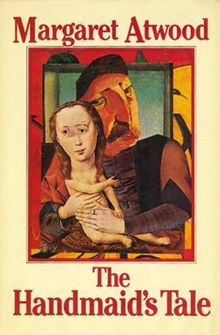
The Handmaid's Tale by Margaret Atwood

The Sellout by Paul Beatty

More reviews on their way!

Agree with my reviews? Comment and share to join the discussion #readmorebooks

Friday, 7 July 2017

A bookish photo Tour of Valencia

A bookish photo tour of Valencia....


Valencia is packed full of bookshop cafes like Ubik Cafe in Russafa perfect for browsing the stacks or  relaxing with a cortado and a paperback. Feeling hungry? Check out the Kurt Vonnegut inspired burger restaurant Slaughterhouse just round the corner.


Also in Russafa, Cafecito's shelves are packed full of art, design and fashion magazines to accompany your Turia beer or glass of Agua de Valencia.


No booky tour of anywhere in Spain would be complete without an appearance by Cervantes. I don't think there is a specific Valencian connection but he is is immortalised here in bronze anyway.


Valencia's old town is a warren of streets and hidden squares with second hand bookshops and the unique bookseller and publisher El Doctor Sax: Beat and Books.


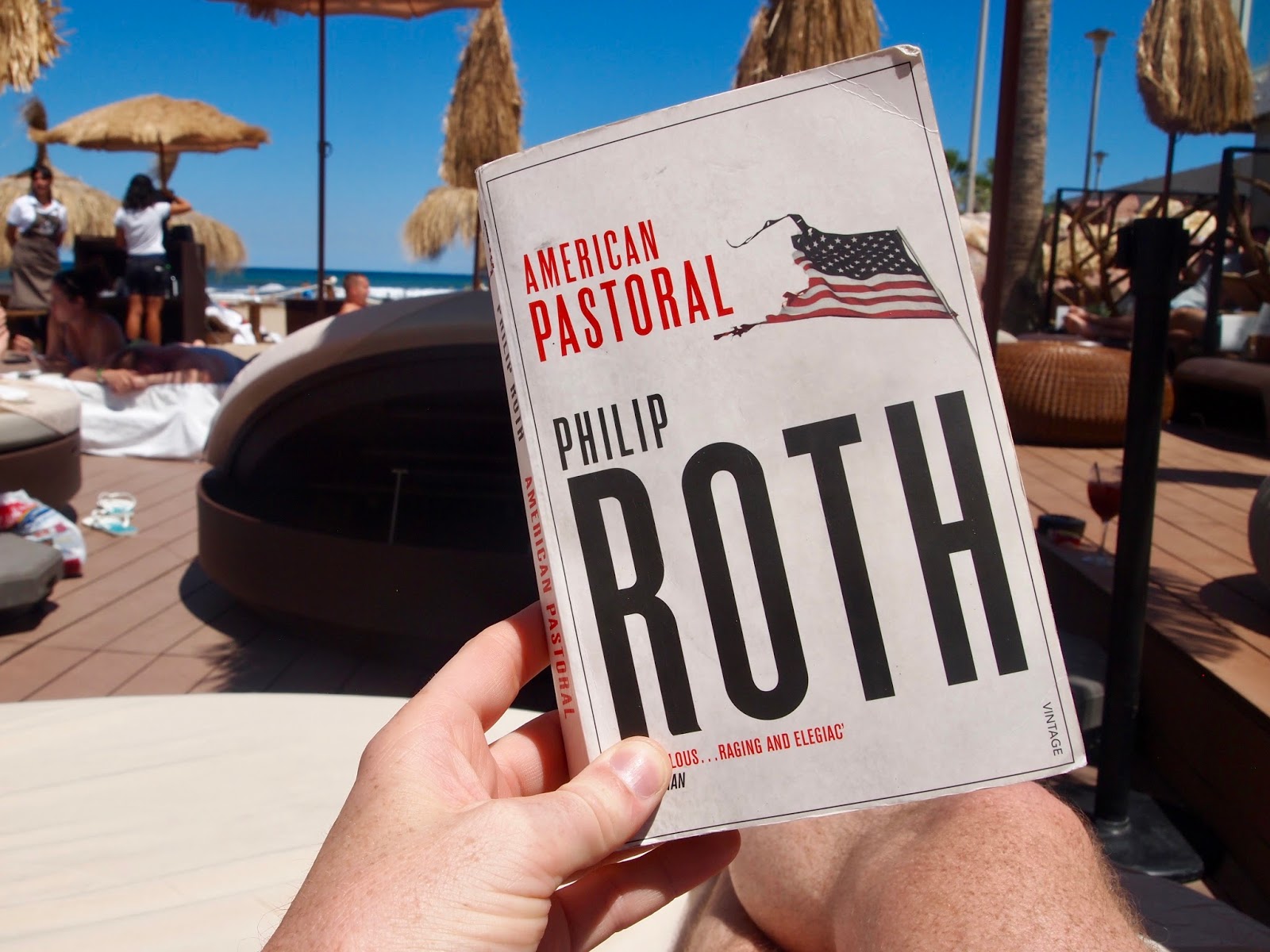
Downtown Valencia is only a couple of kilometres from the beach which means a day on a bed with an ocean view and a stack of books is essential. I chose The Marina Beach Club to while away the best part of the day with Philip Roth's American Pastoral.


How cool is this Jonathan Swift inspired kids playground? A huge Gulliver's Travels climbing and sliding adventure right in the heart of the city!


Cafe Berlin is a classic Valencian bar cafe with a cosy lived in look and plenty of bookshelves to browse. Perfect for late night drinks.


Sunday, 25 June 2017

The Sellout by Paul Beatty


"But history isn't the paper its printed on. It's memory, and memory is time, emotions and song. History is the things that stay with you"


One of the benefits of reorganising that towering stack of books beside your bed is to rediscover that 'must-read' novel that you just haven't found the time to dive into. That's exactly why, last week,  I ended up promoting The Sellout to the very top of the stack.

I first picked up a copy of Paul Beatty's novel just when it was announced as winner of the Man Booker Prize earlier last year. I remember being surprised that this American satire actually won the award (I was a huge fan of David Szalay's All That Man Is) and reading reviews afterwards it was clearly a divisive work but a number of friends convinced me it was worth a read.

The Sellout is not an easy going novel and there are a number of elements that are potentially off putting when you first dive in. Firstly the prose is pretty stream of consciousness style which means long passages of rambling and ranting with little in the way of a break. This is fine if you're following but, and here comes the second problem, much of the story hinges on the reader having a good knowledge of US politics and history as well as a healthy awareness of LA's idiosyncrasies. I'm not expert in any of this and I'm pretty sure that much of the novel's nuance was a little lost for me. That said, I'm much better for taking the leap of faith to just let Paul Beatty's prose settle and find its own meaning in my head; "Exemplars of how self-hatred can compel one to value mainstream acceptance over self-respect and morality".

The novel follows the narrator, known only as 'Me', and his attempt following the death of his father to reinstate the area in which he grew up on to the map of LA. The small town of Dickens was initially swallowed up by urban sprawl before completely disappearing from the city map. Paul Beatty uses Me's one man crusade to satirise post-racial era America; first in a newly segregated school and later when he picks up a slave.

Me's endeavour ultimately leads him to the Supreme Court which brilliantly provides Beatty with an opportunity to hold a mirror up to US society. This is powerful, no holds barred writing which is deeply shocking in parts. Beatty's bravery and willingness to tackle such raw issues through satire is clever, possibly too clever for some which is precisely why this novel has proven to be so divisive. For me, this is a novel I won't forget reading. I'm now working on a rotation system to ensure books like this don't languish at the bottom of my reading stack again.

I read this novel mostly on the train into Marylebone.

The Sellout by Paul Beatty published by OneWorld, 306 pages.     

Agree with my review? Comment and share to join the discussion #readmorebooks


Sunday, 11 June 2017

Wolves in the Dark by Gunnar Staalesen


"Fear of the consequences of what I had done lay like a rock in my chest, blocking my breathing and making me gasp for air, even when I was standing still"


In a recent blog post I wrote about the idea of 'place-making' and the spirit of a town or country that can be created through fiction. Having just read Fish Have No Feet by Jon Kalman Stefansson I was struck by the way the novel skilfully captured the essence of Keflavik, a idiosyncratic town in a relatively exposed part of Iceland. Wolves in the Dark is a similar novel in this respect.

Gunnar Staalesen is one of Norway's most prolific writers having sold over 2 million copies of his crime thrillers featuring private investigator Varg Veum. So popular is Staalesen's lead character that a life sized stature of Veum was recently unveiled in Bergen. Although there are any number of previous novels published in the series this was my first encounter with Staalesen's writing, thank you Orenda Books for the advance copy.

Wolves in the Dark begins with Varg Veum in a desperate state. Following the death of his girlfriend his life has spiralled into a dark alcohol soaked hole that he can't bring himself out of. That is at least until he is arrested after child pornography is found on his hard drive. So begins a fast paced and desperate chase to clear his name and uncover the truth about who has set him up. Old wounds are prised open as he pours over earlier cases to find clues. This is a PI with a complex history and with connections to people all over Bergen, Staaleson leverages his extensive back catalogue expertly.

As the narrative storms through the streets of Bergen we are taken on a whirlwind tour from the Hanseatic wooden houses of Bryggen to functional civic buildings from the 1970s with forensic detail. No detail is left out by Stallenson who casts his lead character against an iconic literary version of Bergen that will resonate with any fan of Scandi-noir.

Wolves in the Dark is a great genre piece that no crime writing fan should miss!

I read this novel mostly on the train into Marylebone.

Wolves in the Dark by Gunnar Staalensen published by Orenda, 240 pages.     

Agree with my review? Comment and share to join the discussion #readmorebooks


Sunday, 4 June 2017

The Handmaid's Tale by Margaret Atwood


"We were the people who were not in the papers. We lived in the blank white spaces at the edge of the print. It gave us more freedom. We lived in the gaps between the stories"


I've read (and reviewed) a fair few of Margaret Atwood's novels over the years, most recently Hagseed a reimagining of The Tempest and the near future tale The Heart Goes Last but as for Atwood's classic The Handmaid's Tale our paths just hadn't crossed.

That was, of course, until the media hype surrounding the TV adaptation began invading my social feeds. As news spread of the imminent series from the office to the pub I was asked numerous times what the story was about; "you've obviously read the book?" I kept hearing. It would have been easy to lie but the fact is I have gaping holes in my library, so I asked myself  - isn't it time I started to fix them?

So first up I was determined to make good on my Atwood shaped omission and picked up a copy of The Handmaid's Tale just as it hit the bestsellers list not for the first time since its original release back in 1985.


Atwood has a distinct talent for creating near future worlds and communities through which to challenge humanity today with great storytelling. The Handmaid's Tale is daring and ambitious in its setting of a totalitarian New England society governed by radical extremists managing a fertility crisis.  It is these very themes that are resonating even more in the new millennia; "a rat in a maze is free to go anywhere, as long as it stays inside the maze".  But that is not to suggest that this is in any way a thesis or academic essay, The Handmaid's Tale is a story about a group of women, and one in particular, who are brave enough to survive and overcome physical adversity and brutality.

Much has been written about Atwood's as a feminist writer but for me that it is reduce the work unnecessarily to a particular sub-genre. For me The Handmaid's Tale is a gripping piece of science fiction with a profound social message throughout. In flashbacks we learn of life before the revolution with typical Atwood poignancy; "We thought we had such problems. How were we to know we were so happy".

What is so interesting is the hype surrounding the adaptation. Having now read the book and begun to watch the series what strikes me is the need to hold and covet the book as you watch the TV show. The additional plot lines created for the 10+ hours long show will delve much further into the world Atwood created but the show can never fully capture the eloquent prose Atwood committed to paper 30 years ago. The book and the TV adaptation go hand in hand. 

I read this novel mostly on the train into Marylebone.

The Handmaid's Tale by Margaret Atwood published by Vintage, 324 pages.     

Agree with my review? Comment and share to join the discussion #readmorebooks


Monday, 29 May 2017

3 of the best

3 of the best: Contemporary fiction I'm still thinking about


Men Without Women by Haruki Murakami

A sublime collection of short stories about love, loss and the places in-between told through the lens of an at once idiosyncratic and recognisable writer.

240 pages, published by Vintage


The End of Eddy
by Edouard Louis

Although a tough read this is a brilliantly personal story that, for me, is exactly what literature is about. This is Edouard Louis's own truth presented in a narrative for others and I for one feel blessed to have read it.

208 pages, published by Harvill Secker


Fish Have No Feet by Jon Kalman Stefansson

If a novel can ever lay claim to real place making then Fish Have No Feet firmly puts Keflavik on the map. 

384 pages, published by Maclehose Press

Read the full reviews on the blog

Six Stories by Matt Wesolowski


"There is evil in the world. There is definitely evil in this world of ours. We carve monuments to our fallen, engrave them with the names of those whose lives were snuffed out when trying to stop evil"


As a teenager I loved weekends in the Lake District; staying over at youth centres trying to get to grips with orienteering and hiking but generally just messing about with mates in the 'great outdoors'. Six Stories took me right back to those days though, thankfully, my own memories are not quite so dark.

Six Stories is the debut novel from Matt Wesolowski  - winner of various awards for his short fiction but published in long form for the first time by Orenda (thanks for the advanced copy!).

The novel is essentially a crime thriller but its Wesolowski's unique narrative structure that sets Six Stories apart. The story is a series of podcasts which set out to investigate an historical murder at an outward-bounds centre in Northumberland. The host of the podcast, Scott King, looks at the case from the perspective of a different characters in each episode. In terms of storytelling this works and allows the full events to unfold as they would if you, the reader, were the investigators.

The structure allows for 6 different perspectives that allow multiple viewpoints on the events that unfold. The narrative builds into a drug and hormone filled nightmare that leaves you doubting the authenticity of all the narrators.

The Northumberland setting works really well as a 'place that conjures monsters of the mind' like the local myth of 'Nanna Wrack' or the Canadian 'Qalupalik'.  Wesolowski is a great writer who has clearly been honing his craft for sometime. This is a great story with a unique narrative structure that delivers a punchy twist. Read it now before it hits the bestseller list. 

I read this novel in paperback on the train into Marylebone

Six Stories by Matt Wesolowski published by Orenda, 320 pages.